Proyectos de Generación de Conocimiento 2024
1149 PID2024-158042OB-I00 B
Understanding Climate Dynamics In Western Africa Using A New Observational Data Set (UnCliAfro)
The increasing intensity and frequency of weather-related extreme events disproportionately impact African nations with minimal contributions to global emissions (IDMC, 2024). Climate variability and change and extreme climate events trigger economic instability, drive internal displacements and exacerbate social inequalities (Parsons et al., 2024). Climate science and climate services are critical for understanding, monitoring and responding to such events, however, the lack of climate data or the limited availability of spatially and temporally accurate climate datasets hampers adequate analysis, posing a significant barrier to achieving a more climate-resilient society (Vaughan and Dessai, 2014).
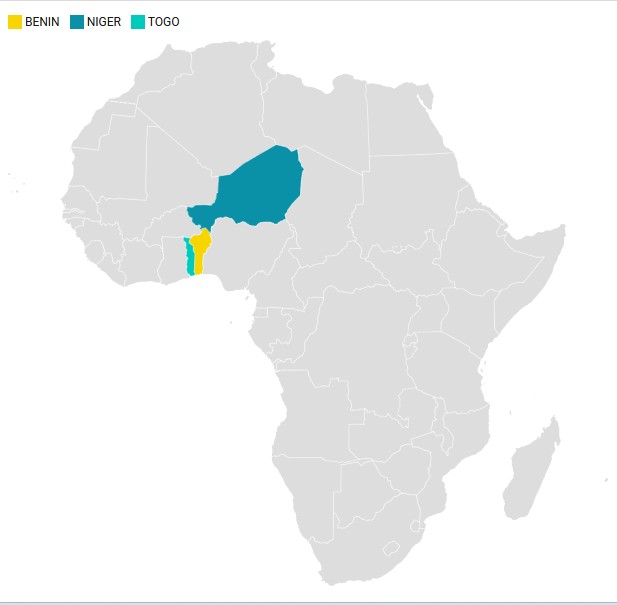
The proposal UNderstanding CLImate Dynamics in Western AFRica using a new Observational Data Set (UNCLIAFRO) will partner an academic institution in Spain (C3/IU-RESCAT/URV) and the NMHS of Spain (AEMET) with three NMHSs in West Africa (Météo-Benin, Benín; DMN, Níger; i ANAMET, Togo).
The project aims to create a new observational climate dataset, calculate and analyze the temporal evolution of various climate indices and understand their relationship to large-scale patterns, and develop user-oriented products. The initiative aligns with and contributes to the Priority 8 "Food, bioeconomy, natural resources, agriculture, climate and environment" of the PEICTI 2024-2027, as well as the Spanish Cooperation Master Plan for Sustainable Development and Global Solidarity 2024-2027, since it will enhance the availability of observational data, compute and assess climate indices, and package these outputs as user-focused products providing service and coverage to a priority region (Western Africa and Sahel, particularly Benin, Niger and Togo).
The project will also contribute to the "Promotion of climate justice and environmental sustainability" and efforts in "Fighting poverty and inequalities" (Ministerio de Asuntos Exteriores, Unión Europea y Cooperación, 2024). UNCLIAFRO is further aligned with several Sustainable Development Goals (SDGs), particularly SDG13, Climate Action, and SDG17, Partnership for the Goals.
It is essential to mention that UNCLIAFRO connects with the governmental goals of the participating countries, ensuring full support from their respective NMHSs. They place strong emphasis on the architecture of the observation network. Investments in climate information will enhance early warnings, deliver crucial benefits, and generate economic advantages by boosting productivity and reducing losses (Rogers and Tsiruknov, 2011; de Pérez et al., 2022).
Given that the project will produce data-driven insights designed to support adaptation efforts, reducing the impacts of floods and droughts (including their secondary effects on food security) on vulnerable populations (Dilley, 2000; Winsemius et al., 2018), it is fully in line with the objective of the Spanish Ministry of Research to invest in climate-resilient development and help vulnerable societies in adapting to the impacts of climate hange. By focusing on strengthening hydrometeorological and multi-hazard warning services, building institutional capacities, and integrating information with end users, the project will enable sustainable systemic change with scalable and replicable solutions (Rogers and Tsirkunov, 2013).
UNCLIAFRO leverages past experiences in the region, such as the CREWS (Climate Risk and Early Warning System) project, and the FSRP (Food System Resilience Program in West Africa) etc. Investing in hydrometeorological services is a "no regrets" climate adaptation investment, particularly for fostering a less vulnerable West Africa.
The project will also contribute to the "Promotion of climate justice and environmental sustainability" and efforts in the "Fight against poverty and inequalities" (Ministry of Foreign Affairs, European Union and Cooperation, 2024). UNCLIAFRO is aligned with several Sustainable Development Goals (SDGs), in particular SDG 13, Climate Action, and SDG 17, Partnership for the Goals.